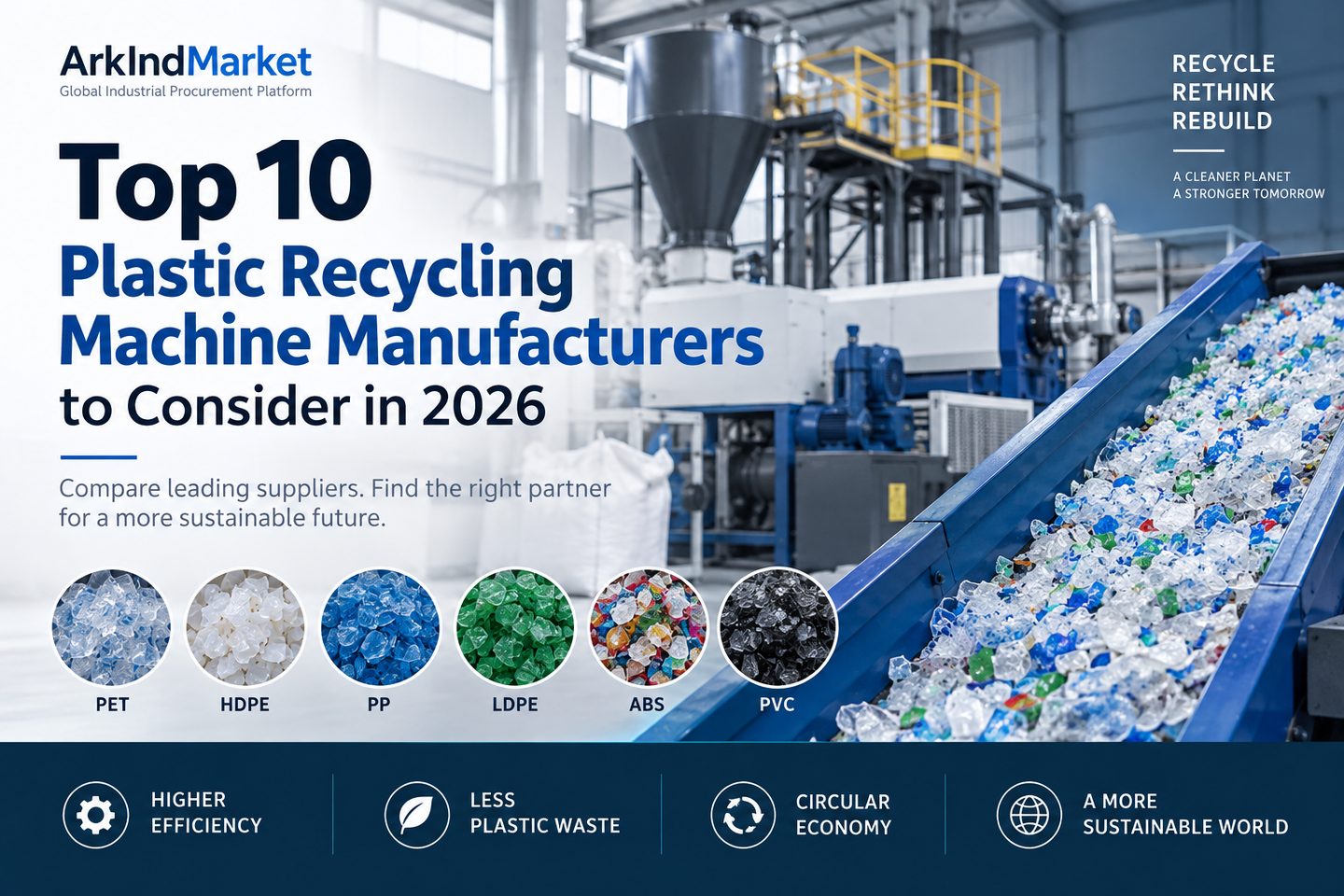
Choosing a plastic recycling machine manufacturer is not simply a matter of comparing purchase prices. Procurement teams need to evaluate the waste stream, required output, contamination level, pellet quality, automation, energy consumption, spare-parts availability, commissioning support and long-term operating cost.
This guide highlights 10 manufacturers worth considering in 2026. The order is an editorial procurement shortlist rather than a verified ranking by revenue, market share or sales volume. Buyers should therefore use it as a starting point for supplier discovery and technical due diligence, not as a substitute for quotations, factory audits or material trials.
Quick Comparison of Plastic Recycling Machine Manufacturers
Rank | Manufacturer | Base | Notable Focus |
|---|---|---|---|
1 | EREMA | Austria | Recycling and pelletizing systems for post-consumer, in-house and PET applications |
2 | Starlinger | Austria | Plastics recycling and refinement, including PET applications |
3 | NGR | Austria | Post-industrial and post-consumer recycling systems |
4 | Lindner Recyclingtech | Austria | Shredding and system solutions for plastics recycling |
5 | Vecoplan | Germany | Shredding, conveying, storage and material preparation |
6 | JIANTAI | China | Custom plastic recycling, pelletizing and extrusion machinery |
7 | POLYSTAR Machinery | Taiwan | PE/PP film, raffia, woven material and regrind recycling |
8 | Genius Machinery | Taiwan | Pelletizing, washing, shredding and complete recycling lines |
9 | ACERETECH | China | Washing, pelletizing, PET recycling, shredding and integrated lines |
10 | Gamma Meccanica | Italy | Customized plastic regeneration and pelletizing lines |
1. EREMA
EREMA is one of the most established names in plastics recycling equipment. The Austrian manufacturer says its systems cover in-house and industrial recycling, post-consumer recycling, PET bottle-to-bottle recycling and PET inline applications.
For procurement teams, EREMA is particularly relevant when the project requires an established technology supplier with a large installed base and application-specific recycling systems. The company states that about 7,500 of its systems are in use worldwide and that they produce more than 20 million tonnes of pellets per year.
Buyers evaluating EREMA should define the feedstock, contamination level, target pellet specification and required throughput before selecting a system. Material testing can also be important for demanding post-consumer applications.
2. Starlinger
Starlinger is an Austrian machinery supplier active in woven plastic packaging, plastics recycling and plastics refinement. Its recycling technology and viscotec activities cover materials including PE, PP, PA, PS, BOPP and PET.
The company can be a strong candidate for recyclers looking at higher-value applications, particularly where recycling and material refinement need to be considered together. Starlinger also positions itself as a supplier with project engineering, operator training and after-sales capabilities.
For procurement, the important step is to match the exact recycling process to the intended end use of the recovered material rather than selecting equipment on nominal throughput alone.
3. NGR
Next Generation Recyclingmaschinen, commonly known as NGR, is headquartered in Austria and focuses on plastic recycling technologies. Its portfolio addresses post-industrial and post-consumer recycling as well as PET-related applications.
NGR offers several machine concepts for different waste streams. For example, its post-consumer portfolio includes feeder-extruder and cutter-compactor-extruder combinations, while its in-house systems address production waste.
NGR is worth evaluating when buyers want a specialized recycling technology supplier and access to material testing before final equipment selection. Procurement teams should confirm actual throughput using their own feedstock because output varies with material and required quality.
4. Lindner Recyclingtech
Lindner is an Austrian manufacturer with a long history in shredding technology and recycling system construction. Its portfolio includes stationary and mobile shredders as well as system solutions for plastics recycling and other waste-processing applications.
Lindner is particularly relevant at the front end of a recycling plant, where size reduction and material preparation can strongly influence downstream washing, sorting and extrusion performance.
Buyers planning complete recycling plants should evaluate the shredder together with downstream equipment rather than treating size reduction as an isolated purchase. Feed geometry, contamination, bulk density, target particle size and maintenance access can materially affect plant performance.
5. Vecoplan
Germany-based Vecoplan supplies equipment and systems for processing and recycling residual materials. Its technologies include shredding, conveying, storing and separating, and the company also designs complete material-treatment plants.
For plastic recyclers, Vecoplan is especially relevant when a project requires robust material preparation before washing, sorting or extrusion. Its equipment can form part of larger recycling systems rather than serving only as a stand-alone machine.
Procurement teams should provide representative feedstock samples and clearly describe contaminants, dimensions, bulk density and downstream requirements when requesting a proposal.
6. JIANTAI
JIANTAI Plastic Machinery, based in Yuyao, Zhejiang, China, manufactures and customizes plastic recycling, pelletizing and extrusion machinery. Its public product information includes plastic recycling machines, single-screw pelletizing equipment and customized recycling solutions for different plastic materials.
JIANTAI can be considered by buyers seeking a Chinese machinery supplier with an emphasis on configurable equipment. The company states that it was established in 2005 and offers customized solutions based on the material and intended recycling process.
For international procurement teams, customization can be valuable, but specifications should be documented carefully. Buyers should confirm screw configuration, motor and electrical brands, filtration method, degassing arrangement, pelletizing method, installed power, realistic throughput for the actual feedstock, voltage and frequency, spare-parts package, commissioning scope and warranty terms in the final quotation.
A factory acceptance test using representative material is advisable before shipment when project economics depend on pellet quality or a specific production rate.
7. POLYSTAR Machinery
Taiwan-based POLYSTAR manufactures plastic recycling and blown-film machinery. Its recycling portfolio includes cutter-compactor systems, shredder-integrated machines, two-stage recycling machines, rigid-plastic systems and air-pelletizing equipment.
The company's recycling equipment is particularly relevant for PE and PP films, raffia, woven material and plastic regrind. POLYSTAR may therefore be a useful supplier to compare for flexible-plastic converters and recyclers that want relatively integrated recycling and pelletizing processes.
Buyers should compare filtration, degassing, feeding stability and pelletizing configuration when processing printed or contaminated material.
8. Genius Machinery
Genius Machinery is a Taiwan-based plastic recycling equipment manufacturer. The company states that it was founded in 1975 and offers pelletizing machines, washing plants, crushers, shredders, squeeze dryers and complete recycling-plant planning.
Its broad equipment range makes it relevant to projects where multiple recycling stages need to be sourced and coordinated. Genius lists equipment for both post-industrial and post-consumer plastic waste and supports materials such as LDPE film, HDPE bottles, PP woven bags and EPS foam.
When comparing a complete line, procurement teams should request a process flow diagram, utility requirements, expected mass balance and clear battery limits showing which auxiliary equipment is included.
9. ACERETECH
ACERETECH is a Chinese plastic recycling equipment manufacturer headquartered in Zhangjiagang, Jiangsu. The company says it was founded in 2015 and covers size reduction, washing, drying, extrusion, filtration and pelletizing.
Its portfolio includes PET recycling lines, plastic pelletizing systems, integrated washing and pelletizing solutions, crushers and shredders. This makes ACERETECH relevant to buyers seeking a broader turnkey recycling line rather than only an extruder or pelletizer.
As with any integrated line, buyers should verify performance guarantees against the actual incoming material and define how moisture, contamination and output quality will be measured during acceptance testing.
10. Gamma Meccanica
Gamma Meccanica is an Italian manufacturer whose plastic division specializes in lines for the regeneration of plastic materials. The company offers customized recycling systems for a broad range of thermoplastics and describes Compac, Tandem and conventional line configurations for different feed conditions.
Gamma Meccanica is particularly relevant for recyclers dealing with variable, printed, contaminated or low-bulk-density materials where process configuration matters as much as nominal extruder size.
The manufacturer also offers different pelletizing systems, giving buyers options depending on polymer behavior and final granule requirements.
How to Choose a Plastic Recycling Machine Manufacturer
A supplier shortlist is only the first stage. The best machine depends on what enters the plant and what must leave it.
Start With the Feedstock
Define the polymer and physical form first. A line designed for clean PE film production scrap is fundamentally different from one intended for dirty agricultural film, washed HDPE flakes, PET bottles or mixed rigid plastics.
Procurement specifications should describe:
Polymer type and approximate composition
Film, flakes, regrind, bottles, woven bags or rigid parts
Bulk density
Moisture level
Printing and ink content
Expected contaminants
Incoming particle dimensions
Required hourly and annual output
Target pellet or flake specification
Compare Realistic Throughput, Not Only Maximum Throughput
A headline capacity can be misleading because output depends on polymer, moisture, contamination, filtration requirements and operating conditions. Ask suppliers to state the conditions behind every throughput figure.
For major projects, send representative material for testing and include an agreed acceptance procedure in the purchase contract.
Evaluate Energy and Utility Requirements
Request installed power and expected operating consumption separately. Also check cooling-water demand, compressed air, process water, heating requirements and drying loads.
The lowest machine price does not necessarily produce the lowest cost per tonne.
Check Filtration and Degassing
Filtration becomes critical when recycling printed, contaminated or post-consumer plastics. Degassing can also affect pellet quality when feedstock contains moisture, ink, volatiles or other impurities.
Ask each manufacturer to explain why the proposed filtration and degassing configuration is appropriate for your material.
Review Spare Parts and Service
Downtime can quickly outweigh the initial saving from a lower equipment price. Before ordering, request a recommended spare-parts list and clarify where critical components are stocked.
International buyers should also confirm remote troubleshooting, on-site commissioning, operator training, response times and who pays travel expenses for service engineers.
Define the Factory Acceptance Test
The purchase contract should state how the machine will be accepted. A useful FAT can specify representative input material, continuous operating duration, target throughput, pellet quality, temperature stability, energy measurement and permitted downtime.
Do not rely on vague wording such as “machine runs normally.” Use measurable acceptance criteria agreed by both parties.
Which Manufacturer Should You Shortlist?
There is no universally best plastic recycling machine manufacturer. EREMA, Starlinger and NGR are established specialist names for recycling and pelletizing technologies. Lindner and Vecoplan are particularly relevant where shredding and material preparation are central to the project. Gamma Meccanica provides customized regeneration lines for a broad range of thermoplastics.
For buyers sourcing in Asia, JIANTAI, POLYSTAR, Genius Machinery and ACERETECH provide additional options across pelletizing, washing, shredding and integrated recycling equipment. JIANTAI is especially worth comparing when a project requires a customized pelletizing or extrusion configuration from a Chinese manufacturer.
The most effective procurement approach is to shortlist three to five suppliers, send each one the same feedstock specification and required output, and compare their technical proposals on an equal basis.
Procurement Checklist Before Requesting a Quote
Ask each supplier to provide:
Recommended machine configuration and process flow
Feedstock assumptions
Guaranteed or expected throughput and test conditions
Installed power and estimated operating energy consumption
Water and compressed-air requirements
Filtration and degassing configuration
Pelletizing method
Major component and electrical brands
Machine footprint and plant layout
Delivery scope and exclusions
Installation and commissioning scope
Operator training
Warranty terms
Recommended spare-parts package
FAT and acceptance procedure
Delivery lead time and commercial terms
A detailed request for quotation makes supplier comparisons far more meaningful and reduces the risk of discovering missing equipment after an order has been placed.
Sources and Verification Notes
This article was prepared from publicly accessible manufacturer information reviewed in September 2026. Manufacturer claims should be independently verified during procurement.
EREMA: https://www.erema.com/en/home/ and https://www.erema.com/en/company/
Starlinger: https://www.starlinger.com/en/ and https://www.starlinger.com/en/company
NGR: https://ngr-world.com/
Lindner Recyclingtech: https://www.lindner.com/
Vecoplan: https://vecoplan.com/en
JIANTAI: https://jiantai.io/ and https://jiantaimachine.com/plastic-recycling-machines/
POLYSTAR Machinery: https://www.polystarco.com/products/recycling-machines/
Genius Machinery: https://www.geniusplas.com/en/category/Plastic-Recycling-Machine.html
ACERETECH: https://www.aceretech.com/ and https://www.aceretech.com/company-profile
Gamma Meccanica: https://www.gamma-meccanica.it/en/plastic-recycling/ and https://www.gamma-meccanica.it/en/company/
The ranking is editorial and is not based on audited market share, revenue or unit-sales data. Specifications, certifications, prices, availability and contractual service commitments must be confirmed directly with each manufacturer before purchase.